Truck Rollover Recovery in Brisbane: Process, Equipment and Safety
Scheduled article. This page is live and indexable, but it is not listed on the News page until November 4, 2027.
Truck Rollover Recovery in Brisbane
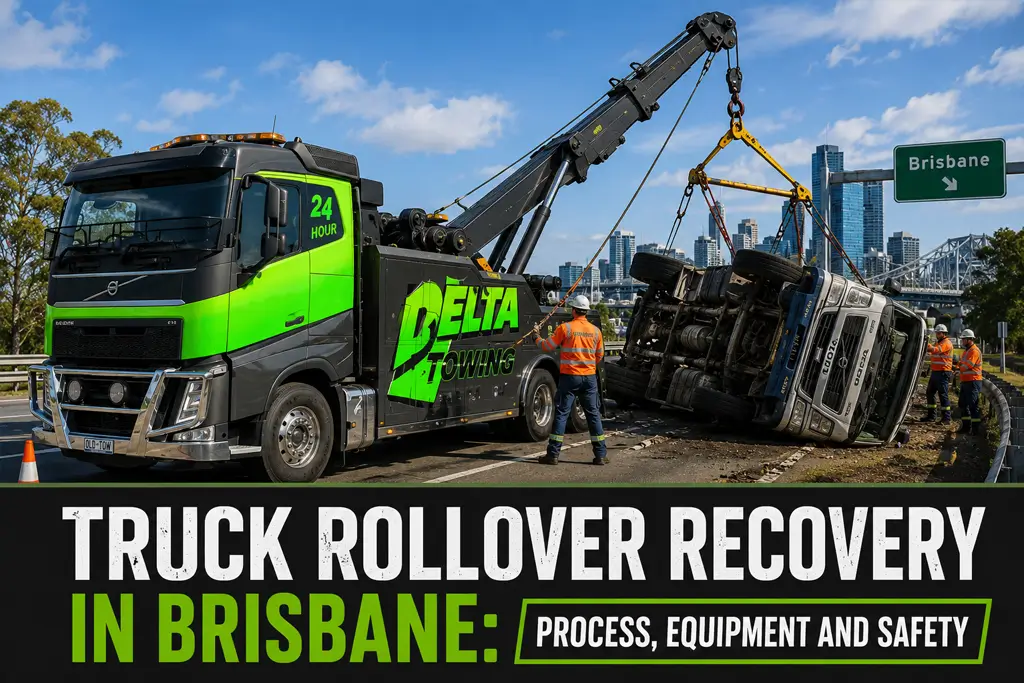
A rolled truck is one of the most challenging recovery scenarios in heavy towing. The vehicle is on its side or inverted, the load may have shifted or spilled, fluids are leaking, and the recovery needs to happen on a public road with traffic nearby. There is no room for improvisation.
Why Rollovers Happen
The most common causes on Brisbane roads are excessive speed on curves, particularly highway on-ramps and off-ramps. Load shift, where an improperly restrained load moves during cornering and tips the vehicle. Wind gusts on high-sided empty trailers, especially on exposed corridors like the Gateway approaches. Soft shoulders, where a driver drifts onto an unsealed shoulder and over-corrects.
The Recovery Sequence
Scene safety: Before anyone touches the truck, the scene must be safe. Traffic management goes up first. Fluid containment for any diesel, oil, or hydraulic fluid leaking from the rolled vehicle. If the vehicle is in an unstable position, it gets stabilised before recovery begins.
Load assessment: If the truck is loaded, the load condition affects the recovery plan. A shifted load changes the vehicle's centre of gravity and may make uprighting unpredictable. If the load needs to be partially or fully removed before the vehicle can be righted, that adds time and requires additional equipment.
Uprighting: Our rotator unit connects to rated lifting points on the rolled vehicle. The rotator lifts and rotates the vehicle back onto its wheels in a controlled movement. This is not a quick yank. It is a slow, deliberate rotation with the operator controlling the angle, speed, and final placement.
For trucks that have rolled off an embankment, the rotator may need to lift the vehicle uphill and back onto the road surface. This requires careful positioning of the recovery truck and sometimes ground anchoring.
Post-uprighting assessment: Once the truck is back on its wheels, the recovery operator checks whether it can be towed. Bent suspension, damaged steering, and compromised frames may prevent normal towing. If the truck cannot be towed on its wheels, it goes onto a tilt tray.
Transport: The recovered vehicle is transported to a repairer, assessment centre, or holding yard. Documentation including photos and condition notes accompanies the vehicle.
Equipment
The rotator is the primary tool for rollover recovery. Without a rotator, uprighting a heavy vehicle requires a mobile crane, which takes hours to arrange and set up. Our rotator is permanently mounted on a heavy truck chassis and arrives ready to work. For most single-vehicle rollovers, the rotator can upright the truck without additional equipment.
For complex rollovers involving multiple trailers or very heavy vehicles, we may use the rotator in combination with additional rigging, winches, or secondary tow trucks.
Time on Scene
A straightforward truck rollover on a flat surface takes roughly 2-4 hours from arrival to departure. Complex rollovers involving load transfer, embankment recovery, or significant traffic management can take significantly longer.
For truck rollover recovery in Brisbane, call Delta Heavy Towing on +61 455 996 600.
Need this handled today?
Dispatch is staffed 24 hours a day, and we quote before the truck rolls. Tell us the vehicle, the location and where it needs to go.
Keep reading
Related guides
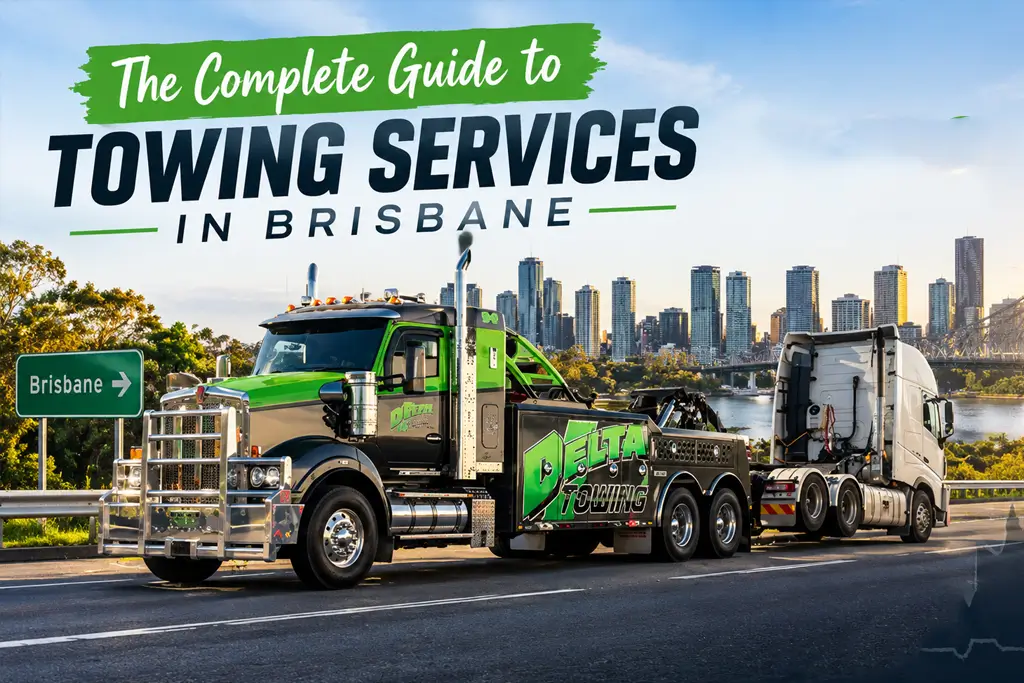
The Complete Guide to Towing Services in Brisbane
Brisbane's towing market serves a city of 2.5 million people with trucks, buses, and commercial vehicles running through an extensive road network in…
Read the article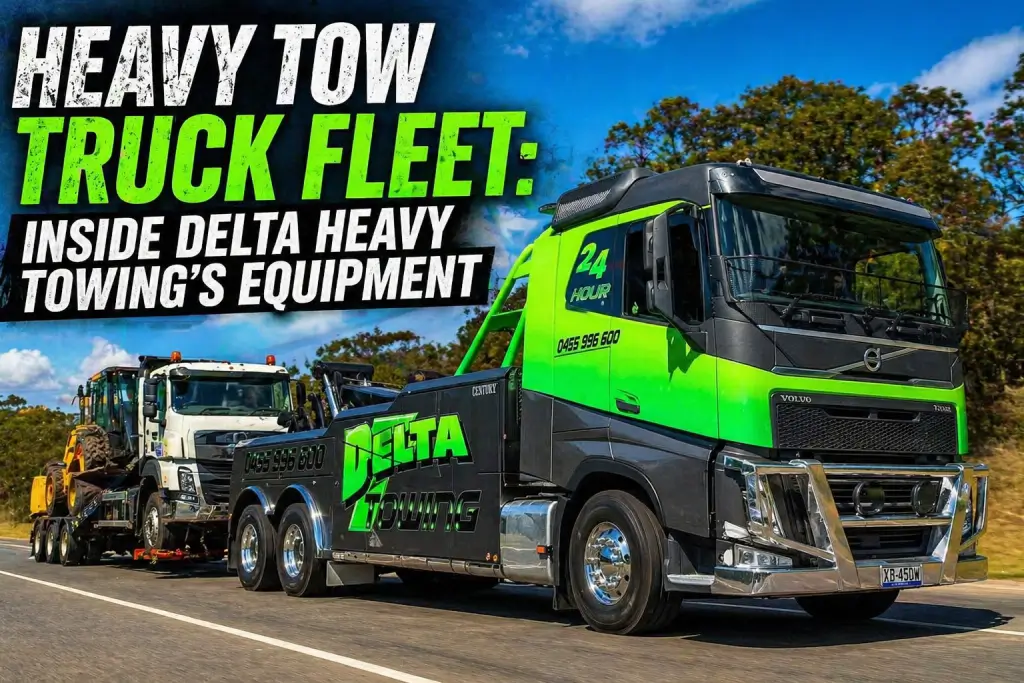
Heavy Tow Truck Fleet: Inside Delta Heavy Towing's Equipment
We get asked about our trucks regularly. Fleet managers want to know if we can handle their largest vehicle. Construction companies want to know if w…
Read the article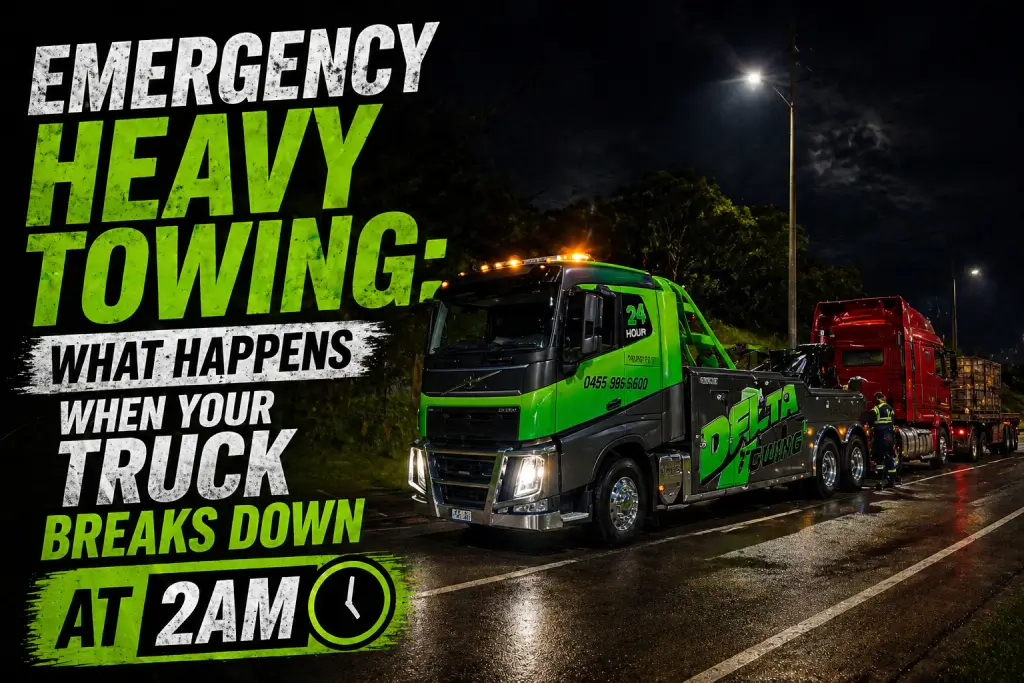
Emergency Heavy Towing: What Happens When Your Truck Breaks Down at 2AM
Emergency heavy towing is what stands between a stranded driver and a resolved crisis. The phone rings at 2am. It's your driver. The truck has stoppe…
Read the article