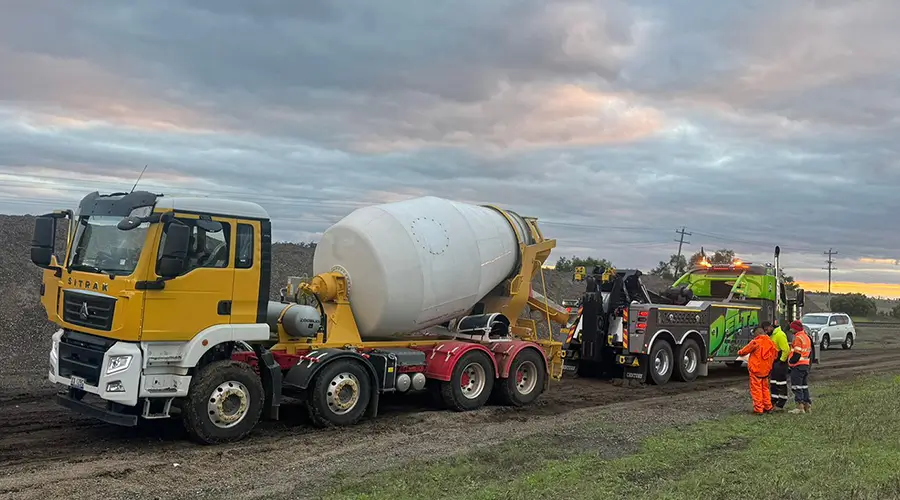
Earthmoving equipment
Excavators from 5 tonnes up to 50-tonne class machines, plus dozers, graders, scrapers and compaction rollers.
 Delta Heavy TowingBrisbane · 24/7
Plant & equipment haulage
Excavators, cranes, industrial plant, farm machinery and mining equipment moved on low loaders and heavy tilt trays — with the access checked before the truck leaves.
24/7 dispatch · six depots across South East QLD · we quote before we roll
Moving machinery is a planning exercise that ends with a truck. The trailer choice, the permit, the route and the site access all get decided before anything is loaded — because a 40-tonne excavator on a low loader that arrives at a gate it cannot get through has cost you the whole day.
Delta Heavy Towing transports heavy machinery across Brisbane, South East Queensland and out into the regions. Construction plant, cranes, industrial equipment, agricultural machinery and mining gear, on low loaders and heavy tilt trays with rated load restraint.
We work to the National Transport Commission load restraint guide on every load, and we confirm delivery site conditions before dispatch rather than discovering them on arrival.
What we handle
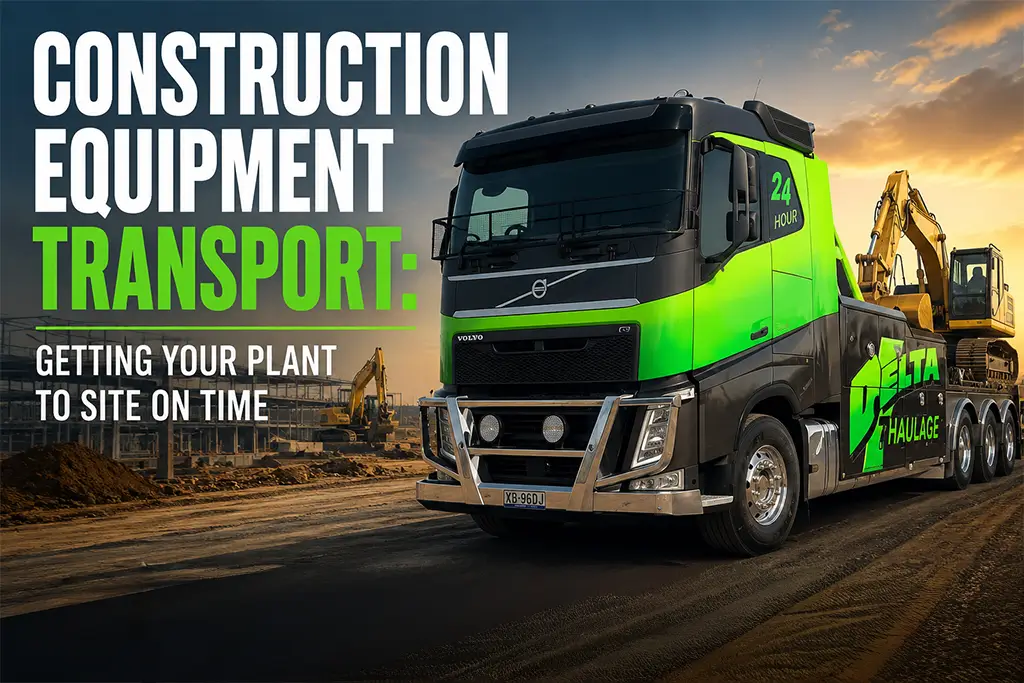
Tracked machines go on low loaders. Wheeled machines sometimes travel on tilt trays. Which one depends on weight and dimensions, and we work that out first.
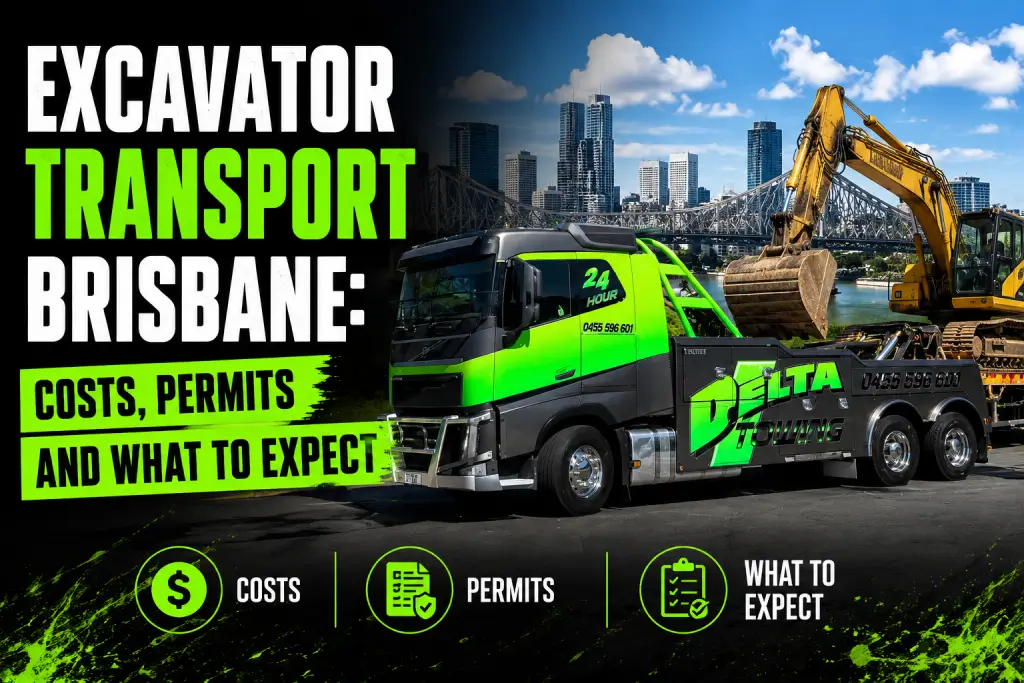
Excavators from 5 tonnes up to 50-tonne class machines, plus dozers, graders, scrapers and compaction rollers.
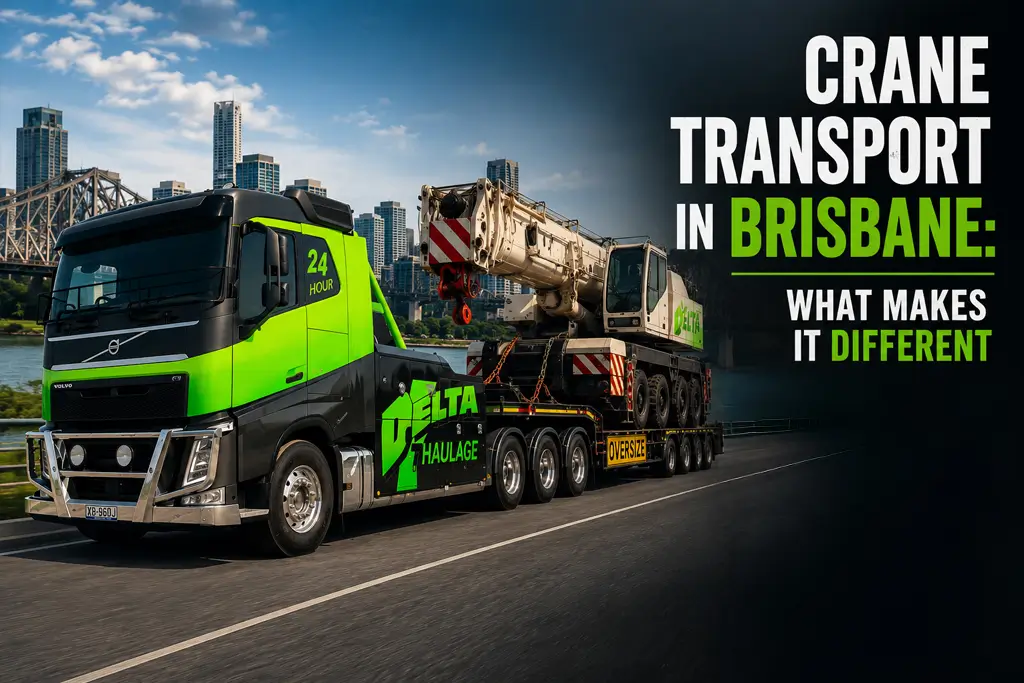
Mobile cranes, tower crane components, boom lifts and scissor lifts. Crane moves often need partial disassembly at pick-up and reassembly on delivery, sequenced with your crane operator.
Generators, compressors, pumps, tanks and processing equipment. Irregular shapes need custom tie-down arrangements, which we plan per load rather than per category.
Tractors, headers, sprayers and grain handling gear. Farm machinery is frequently wider than standard limits, so permits and pilots come into it — we handle both.
Underground loaders, haul truck components, screening plants and crusher parts, often heading west of Toowoomba, through the Surat Basin or into Central Queensland.
Press machines, tanks and factory equipment coming in or going out. Usually the constraint is the building, not the road.
How it runs
Five stages. The first two are where the money is saved or lost.
Dimensions and weight first. If you cannot supply certified weights we work from manufacturer specifications or arrange a weighbridge visit. Those numbers decide whether the load is standard or over-dimensional.
Not every road in Brisbane will take a low loader carrying a 40-tonne excavator. We check bridge weight limits, overhead clearances, turning radii and power line heights along the actual route, and obtain NHVR permits where needed.
Tracked machines drive onto the low loader under their own power where site conditions allow; wheeled machines are winched or driven. Everything is secured with rated chains, binders and blocking suited to the machine.
Operators hold the licences for the combination they are driving. Over-dimensional loads travel with pilot vehicles ahead and behind to manage traffic and warn of hazards.
Site access is confirmed before dispatch. Soft ground, tight space or induction requirements get planned for in advance instead of being solved in the gateway.
Send the machine model, its loaded dimensions, and the pick-up and delivery addresses. We will confirm the trailer, the permit position and the price.
Detail that matters
Different sectors bring different constraints. Knowing them ahead of time is most of the job.
Construction and civil. A road project in Ipswich wraps up and the excavators need to be on a subdivision at North Lakes by Monday morning. That is the standard shape of the work, and it lives or dies on scheduling.
Mining and resources. Surat Basin gas fields, Central Queensland coal, quarries across the Darling Downs. We know the routes, the permit requirements and the access limitations that come with each.
Agriculture. Headers between properties at harvest, tractors from dealerships, equipment shifted as seasons change. Width is usually the trigger for permits here, and harvest timing is unforgiving.
Manufacturing and industrial. Installing and removing heavy equipment at factories, processing plants and warehouses across Brisbane and South East Queensland.
Straight answers
If the loaded machine exceeds standard height, width, length or mass limits, yes — an NHVR permit is required. We assess every load and apply where needed. Permit processing typically takes two to five business days, so factor that into your program.
It depends on machine weight and dimensions, distance, and whether permits and pilot vehicles are involved. We quote every job before confirming, so you have a firm price rather than an estimate that moves.
We do it regularly — soft ground, tight sites and awkward entry points are normal on construction work. The one thing we need is to know about the limitation before dispatch, so the right equipment turns up first time.
For cranes and some industrial plant, partial disassembly is often required to travel legally. We coordinate that with your equipment operator or supplier rather than doing it unilaterally.
During business hours we generally come back within the hour, provided we have the dimensions, weight, pick-up and delivery addresses.
Related services
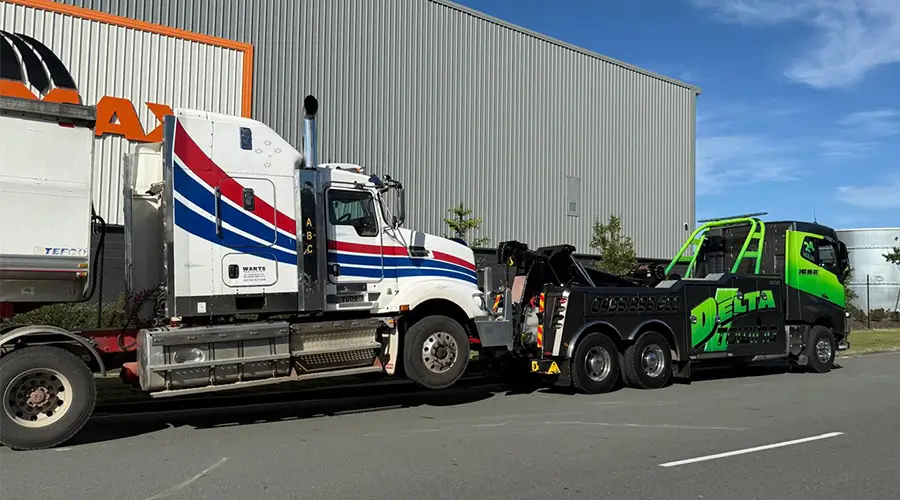
Our core work. Units rated above 23 tonnes GVM for semi-trailers, B-doubles, rigids and road trains.
Explore Heavy Duty Towing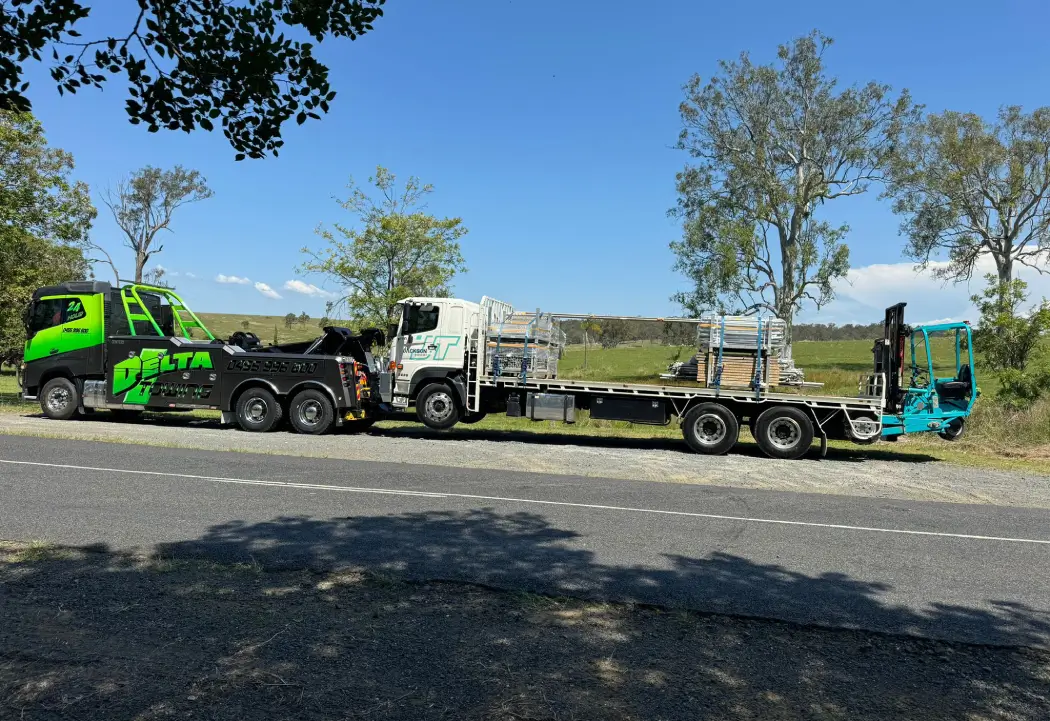
Oversized and overweight moves with NHVR permits, pilot vehicles, route planning and compliance handled end to end.
Explore Heavy Haulage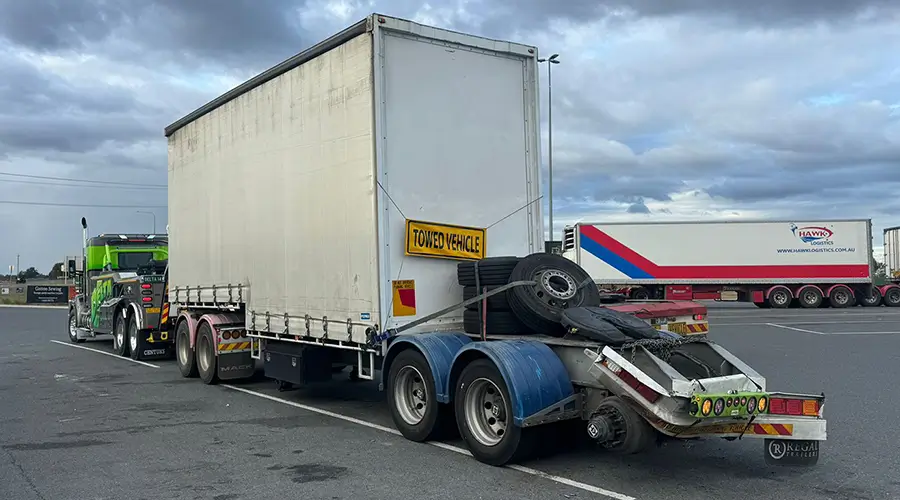
Oversize loads with full permit management, escort vehicles, route surveys and compliance documentation.
Explore Over Dimensional TowingReading
Brisbane has dozens of towing companies. The Google results page is long, the ads are aggressive, and everyone claims to be the best. When your truck…
Read the articleBrisbane's southside stretches from the CBD across the river through Woolloongabba, down through Moorooka and Sunnybank, out to Logan, and south alon…
Read the articleBrisbane's towing market serves a city of 2.5 million people with trucks, buses, and commercial vehicles running through an extensive road network in…
Read the article