
Emergency Heavy Towing: What Happens When Your Truck Breaks Down at 2AM
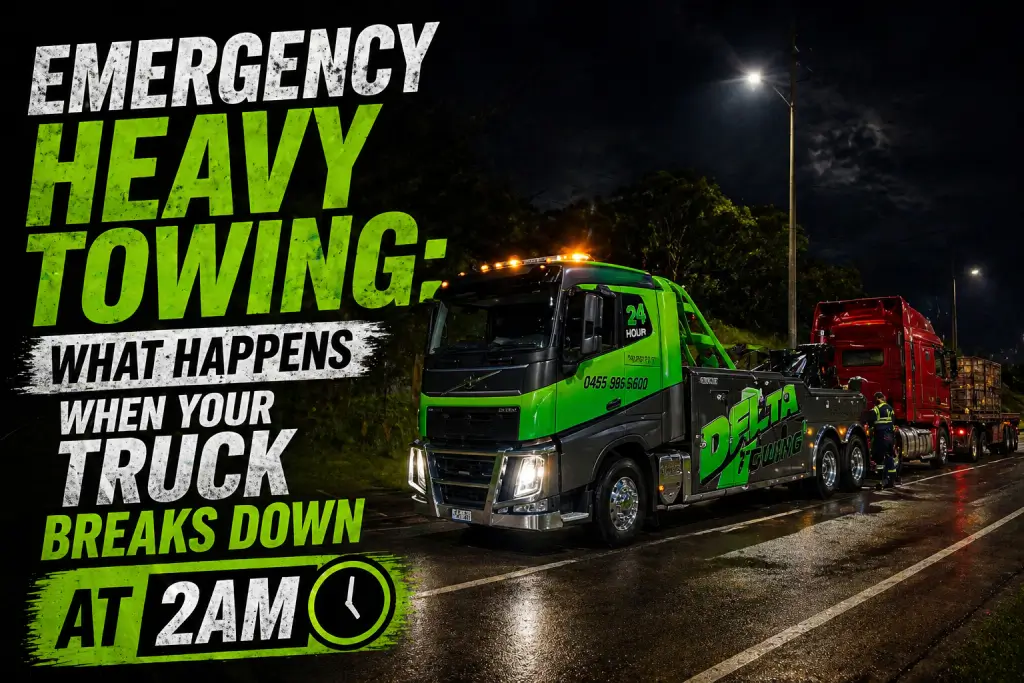
Emergency heavy towing is what stands between a stranded driver and a resolved crisis. The phone rings at 2am. It's your driver. The truck has stopped, the warning lights are on, and he's sitting on the shoulder of the Bruce Highway somewhere north of Burpengary with the hazard lights flashing into empty darkness. This isn't a theoretical scenario. It happens to fleet operators, logistics companies, and owner-drivers regularly.
Here's what happens next if you have a heavy towing provider set up — and what happens if you don't.
If You Have a Provider
You call the towing company's dispatch number. A real person answers because genuine 24/7 operations staff the phone around the clock. You give them the driver's location, vehicle type, and what happened. The dispatcher selects the nearest available heavy tow truck, gives you an ETA, and provides the operator's mobile number so the driver can communicate directly.
The tow truck rolls from the nearest depot. While it is in transit, the driver sits in the cab with the doors locked, hazard lights on, and seatbelt on. Standing outside a truck on a highway at 2am is one of the most dangerous things a driver can do.
The operator arrives, sets up traffic management if needed, assesses the vehicle, and connects it. The whole process from phone call to truck moving typically takes 60-90 minutes, depending on the distance from the depot.
If You Do Not Have a Provider
You start searching on your phone. At 2am, half the numbers listed online go to voicemail. The ones that answer may not have heavy tow trucks available immediately, because they run a small fleet and the trucks are parked for the night. You make three or four calls before finding someone who can help.
By the time a truck is dispatched, 30-45 minutes have already been spent on the phone. The driver has been sitting on the highway for over an hour. Response time stretches because the operator is coming from wherever they are, not from a nearby depot.
The total elapsed time from breakdown to vehicle moving can easily exceed two hours. On a motorway, that means two hours of a vehicle blocking a lane, two hours of safety risk, and two hours of the driver sitting in an increasingly uncomfortable situation.
What Makes After-Hours Towing Different
Night towing for heavy vehicles carries higher risk. Visibility is reduced, other drivers may not see a stopped truck until they are close, and the tow truck operator is working in conditions where a mistake has worse consequences. Traffic management at night requires reflective signage, flashing lights, and careful positioning of the tow truck relative to traffic flow.
The operators working overnight shifts are experienced with these conditions. They position their tow truck to create a physical barrier between the casualty vehicle and traffic. They use headlamps and portable lighting to see what they are doing. They move with deliberate care because rushing on a dark highway gets people hurt.
Setting Up for the Inevitable
If you operate heavy vehicles, a breakdown outside business hours will happen. It is not a question of if but when. Setting up a towing account before that happens means the first 2am phone call is smooth instead of chaotic.
Save the towing company's number in your phone and your drivers' phones. Include it in your breakdown procedure documentation. Brief your drivers on what information to provide when they call. These small steps save significant time when they matter most.
For emergency heavy towing in Brisbane, available around the clock, call Delta Heavy Towing on 0455 996 600.
Need this handled today?
Dispatch is staffed 24 hours a day, and we quote before the truck rolls. Tell us the vehicle, the location and where it needs to go.
Keep reading
Related guides
Towing a Lorry in Australia: Rules, Requirements and Process
In Australia, we tend to say "truck" rather than "lorry," but the search traffic tells us plenty of people use the word lorry when looking for heavy …
Read the article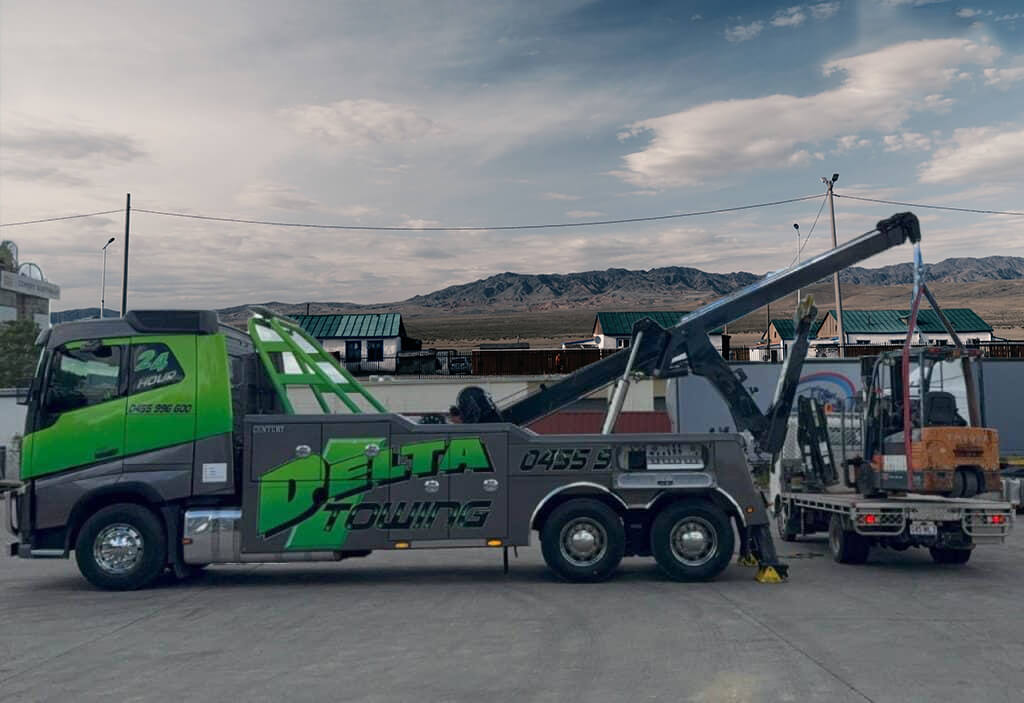
When a Bus Breaks Down: What Operators Should Do Next
Imagine a busy highway getting obstructed by a stranded bus that's stuck during peak hour. You can understand how the stressful situation might be! T…
Read the article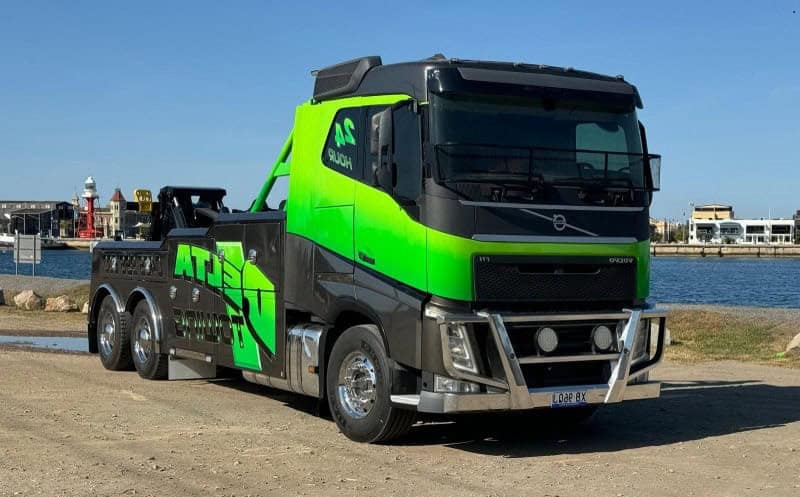
How Delta Heavy Towing Ensures Quick and Safe Truck Recovery Across Queensland
Have you ever faced a truck breakdown on the road? If yes, you better know how important it is having a responsible hand to professionally deal with …
Read the article