How to Transport Heavy Machinery Safely in Brisbane
Scheduled article. This page is live and indexable, but it is not listed on the News page until May 19, 2027.
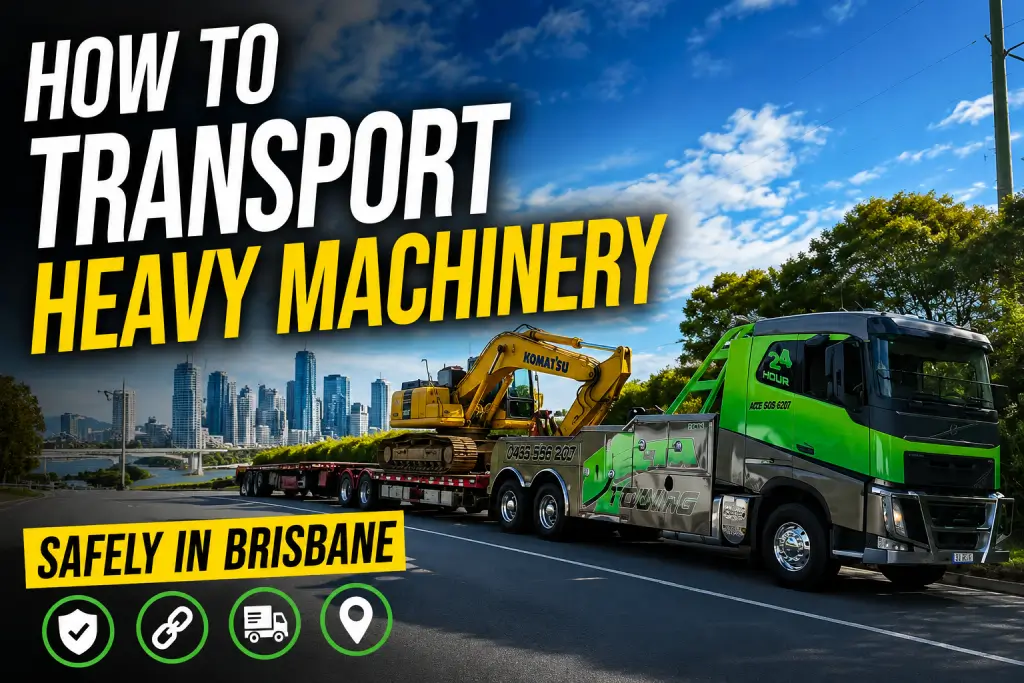
Moving heavy machinery looks straightforward until something goes wrong. A 25-tonne excavator that shifts during transport can roll a trailer. An unsecured dozer blade can swing and damage the machine or the truck. An overheight load that strikes a bridge stops traffic for hours and creates a liability claim that dwarfs the transport cost. Safe machinery transport starts before anyone touches a winch.
Pre-Transport Assessment
Every machinery transport starts with measurements. Height as it sits on the trailer, not the catalogue height. Width including mirrors, handrails, or extended buckets. Weight including fuel, hydraulic fluid, and any attachments. These numbers determine the trailer type, route, permits, and load restraint method.
If the machine is going onto a low loader, add the deck height to the machine height. A 3.8-metre-tall excavator on a 600mm deck becomes 4.4 metres. That exceeds the standard 4.3-metre height limit and triggers a permit requirement.
Loading
Tracked machines drive onto low loaders under their own power where the ground is firm and level. The operator needs a clear, flat approach to the ramps. If the ground is soft, muddy, or sloped, the loading area needs preparation first. Laying steel plates or using a compacted gravel pad prevents the machine from slipping during loading.
Once on the trailer, the machine is positioned to distribute weight evenly across the axle groups. The bucket or attachment is lowered to its lowest position to reduce the centre of gravity and overall height. The turret is locked if the machine has a slew function.
Load Restraint
The National Transport Commission Load Restraint Guide sets the standard. Machinery must be restrained to prevent movement in any direction during transport, including emergency braking, cornering, and road surface irregularities.
Chain and binder restraint is standard for heavy machinery. Chains attach to rated points on the machine and the trailer. Binders tension the chains to prevent any slack. The number of chains required depends on the machine weight and the friction between the tracks or tyres and the trailer surface.
Rubber-tracked machines on a steel trailer deck have different friction characteristics than steel-tracked machines. The restraint calculation accounts for this difference. Under-restraining because someone assumed higher friction than actual is a common and dangerous mistake.
Route and Permits
If the loaded combination exceeds any standard limit, an NHVR permit is required. For machinery transport within Brisbane, width is the most common trigger. Excavators with buckets attached often exceed 2.5 metres. Removing the bucket before transport may bring the width within limits and avoid the permit requirement.
Route planning checks bridge weight limits, overhead clearances, and turning space. Low loaders are long vehicles and need more room at intersections than standard semi-trailers.
Unloading
Unloading at the delivery site requires the same care as loading. The ground must support the machine and the trailer. The unloading area needs enough space for the machine to drive off safely. If the site has specific induction requirements or safety procedures, the transport operator needs to know about them before arrival.
For heavy machinery transport in Brisbane, call Delta Heavy Towing on +61 455 996 600.
Need this handled today?
Dispatch is staffed 24 hours a day, and we quote before the truck rolls. Tell us the vehicle, the location and where it needs to go.
Keep reading
Related guides
The Complete Guide to Towing Services in Brisbane
Brisbane's towing market serves a city of 2.5 million people with trucks, buses, and commercial vehicles running through an extensive road network in…
Read the article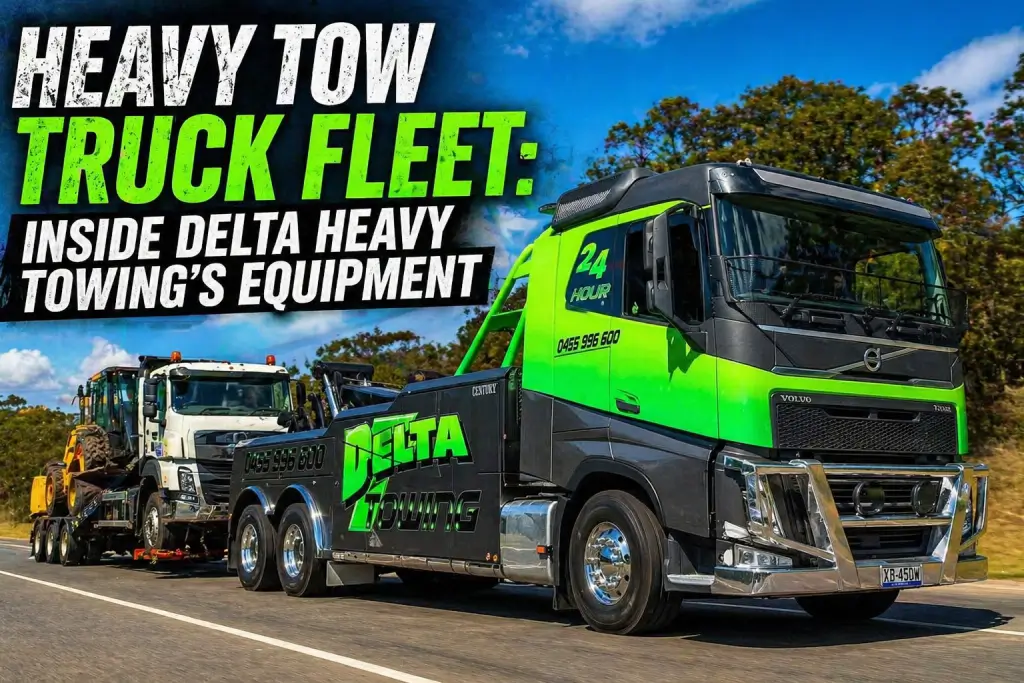
Heavy Tow Truck Fleet: Inside Delta Heavy Towing's Equipment
We get asked about our trucks regularly. Fleet managers want to know if we can handle their largest vehicle. Construction companies want to know if w…
Read the article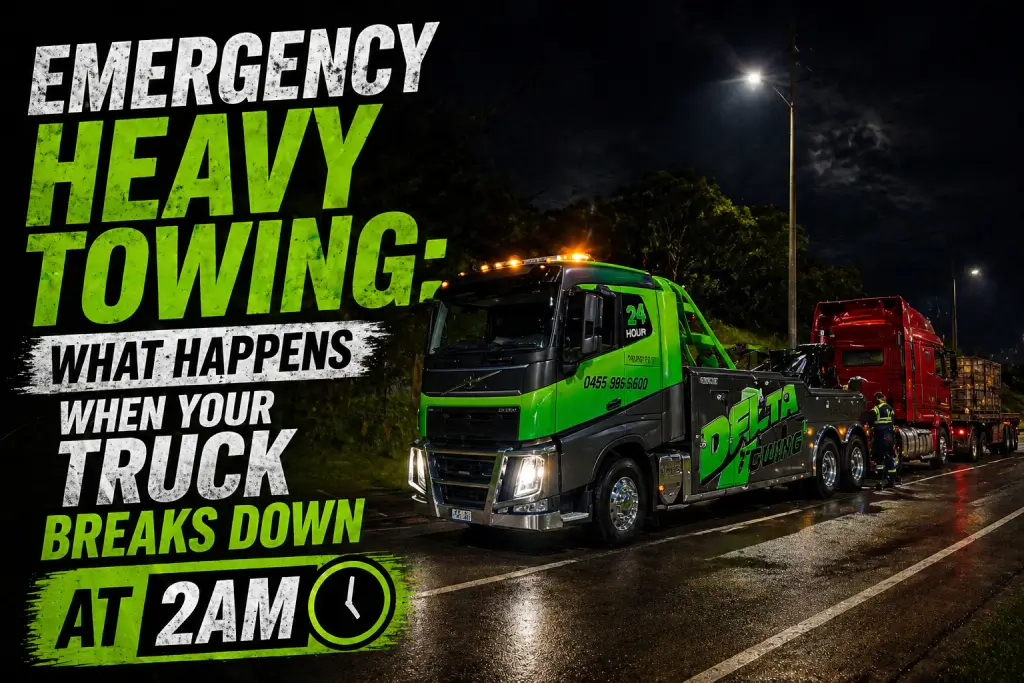
Emergency Heavy Towing: What Happens When Your Truck Breaks Down at 2AM
Emergency heavy towing is what stands between a stranded driver and a resolved crisis. The phone rings at 2am. It's your driver. The truck has stoppe…
Read the article