
How to Prepare Your Heavy Vehicle for Long-Distance Towing
Scheduled article. This page is live and indexable, but it is not listed on the News page until February 19, 2028.
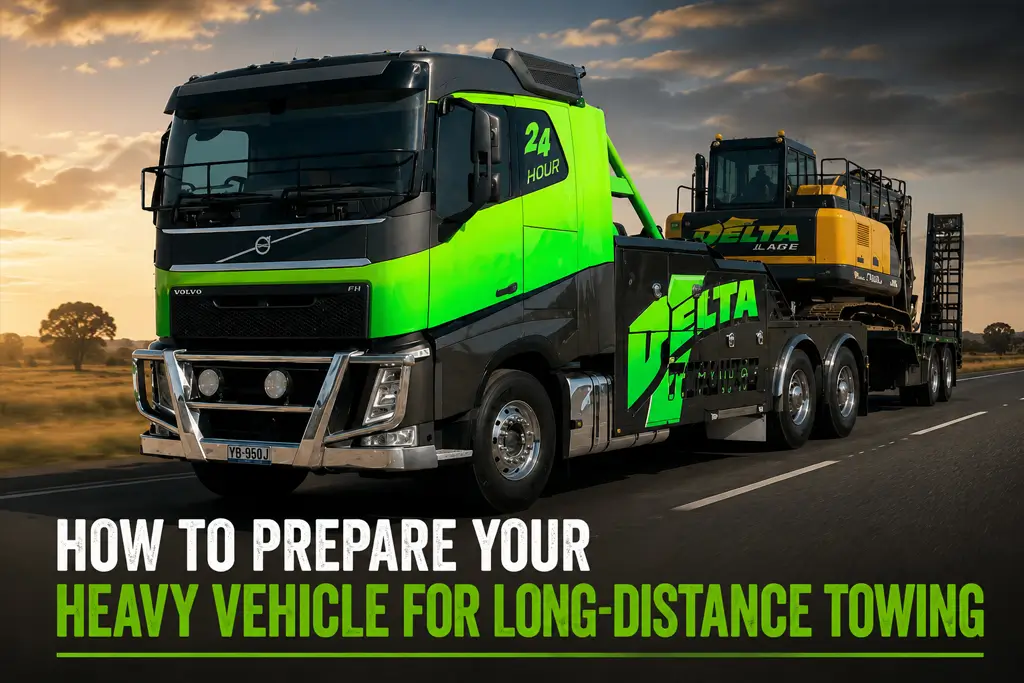
A truck being towed from Brisbane to Sydney is going to spend 10-12 hours on a tow truck. That is a long time for a vehicle to be travelling in a way it was not designed for. Some preparation before the tow truck arrives makes the journey safer and reduces the risk of additional damage during transport.
Before the Tow Truck Arrives
Secure loose items: Anything in the cab that is not bolted down will move during towing. Tools, paperwork, personal items, phone chargers, and cups all become projectiles during braking and cornering. Clear the cab or secure everything.
Close and lock all doors, windows, and compartments: Wind pressure during highway towing can force open poorly latched doors and storage compartments. A pantech door that pops open at 100 km/h on the New England Highway creates a hazard for following traffic.
Remove or secure external items: Aerials, mirrors that fold, loose body panels, and any aftermarket accessories that might vibrate loose during a long tow. If something looks like it might fall off, take it off or strap it down.
Record the vehicle condition: Take photos of the truck from all angles before the tow truck connects. Document any existing damage. This protects both you and the towing company if there is a dispute about damage that occurred during transport.
Drain or secure fluid containers: If the truck carries additional fluid containers (spare engine oil, hydraulic fluid, coolant top-up bottles), secure them so they cannot fall over and leak during transport.
Information for the Towing Company
For a long-distance tow, the towing company needs more detail than for a short metro tow. Provide the vehicle's exact weight (laden or unladen), any known mechanical issues beyond the primary breakdown, whether the steering works (affects towing method), whether the brakes work (affects braking capacity of the combination), driveline configuration (single drive, tandem, all-wheel-drive), and any special features like air suspension, lift axles, or retarders.
During the Tow
For long-distance tows, the tow truck driver manages the vehicle throughout the journey. They monitor temperatures, tyre condition, and strap tension at fuel stops. They adjust speed for gradient and weather conditions. If something changes during the journey, they assess and respond.
As the vehicle owner, you do not ride along in most cases. Long-distance tow trucks typically have a single-operator cab. If you need to get to the destination, arrange separate transport.
At the Destination
When the vehicle arrives, inspect it against the photos you took before departure. Check for any new damage, check that doors and compartments are intact, and confirm the vehicle is positioned where you want it.
For long-distance heavy vehicle towing from Brisbane, call Delta Heavy Towing on +61 455 996 600.
Need this handled today?
Dispatch is staffed 24 hours a day, and we quote before the truck rolls. Tell us the vehicle, the location and where it needs to go.
Keep reading
Related guides
The Complete Guide to Towing Services in Brisbane
Brisbane's towing market serves a city of 2.5 million people with trucks, buses, and commercial vehicles running through an extensive road network in…
Read the article
Heavy Tow Truck Fleet: Inside Delta Heavy Towing's Equipment
We get asked about our trucks regularly. Fleet managers want to know if we can handle their largest vehicle. Construction companies want to know if w…
Read the article
Emergency Heavy Towing: What Happens When Your Truck Breaks Down at 2AM
Emergency heavy towing is what stands between a stranded driver and a resolved crisis. The phone rings at 2am. It's your driver. The truck has stoppe…
Read the article