Heavy Vehicle Recovery After an Accident: What Happens Next?
Scheduled article. This page is live and indexable, but it is not listed on the News page until October 19, 2027.
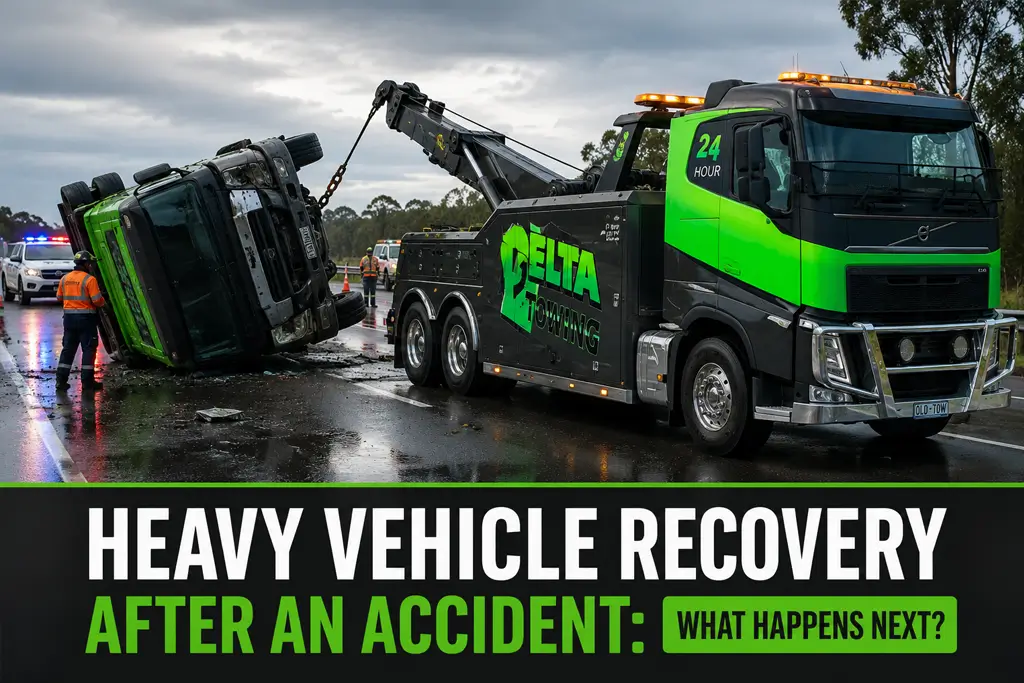
A truck accident on a Brisbane highway triggers a sequence of events that most vehicle owners never think about until it happens. Police, ambulance, fire services, insurance companies, towing operators, and road authorities all become involved, often simultaneously. Understanding the process helps you manage the situation instead of being managed by it.
Immediate Aftermath
Emergency services respond first. Police control the scene, ambulance handles injuries, and fire services manage any fuel spills or fire risks. The truck operator or driver does not control this phase. Emergency services decide when the scene is safe enough for recovery operations to begin.
Police and Scene Management
Queensland Police will investigate the accident, particularly if injuries are involved or if the heavy vehicle contributed to the incident. The truck may be held as evidence. In some cases, police will not release the vehicle for towing until their investigation at the scene is complete.
TMR (Transport and Main Roads) gets involved when the accident occurs on a state-controlled road. Their primary concern is clearing the road and restoring traffic flow. TMR may request a specific tow truck operator, or they may allow the vehicle owner to nominate their preferred operator.
Calling Your Towing Provider
Once police release the vehicle for removal, you or your fleet manager contacts your towing provider. For heavy vehicle accidents, the towing company needs to know the vehicle type and configuration, the nature of the damage (is it driveable, can it be towed, does it need recovery?), whether the vehicle is loaded and what the cargo is, whether dangerous goods are involved, the exact location, and any instructions from police about where the vehicle can be taken.
The Recovery Process
Accident recovery differs from breakdown towing. A damaged truck may have compromised structural integrity, leaking fluids, sharp edges, unstable loads, or electrical hazards. The recovery operator assesses all of these before connecting.
If the truck has rolled, it needs uprighting before towing. If the chassis is bent, it may not tow straight and may need to be loaded onto a tilt tray instead. If the cab is severely damaged, the steering and braking may not function, requiring driveline disconnect and careful positioning.
Our recovery crew documents the vehicle condition with photos before commencing any recovery work. This documentation supports insurance claims and, if needed, legal proceedings.
Insurance Coordination
Most commercial truck insurers have preferred repairer and towing provider panels. Your insurer may want the truck taken to a specific assessment centre or repairer. If you have a preference, communicate that early. Once the truck is at a specific location, moving it again adds cost and time.
We work with all major commercial vehicle insurers and can provide the documentation they require: photos, condition reports, tow receipts, and storage invoices.
After Recovery
The recovered vehicle goes to a repairer, an assessment centre, or a secure holding yard depending on the insurer's instructions. If the vehicle is a write-off, it stays in storage until the insurer arranges collection or disposal.
For heavy vehicle accident recovery in Brisbane, call Delta Heavy Towing on +61 455 996 600.
Need this handled today?
Dispatch is staffed 24 hours a day, and we quote before the truck rolls. Tell us the vehicle, the location and where it needs to go.
Keep reading
Related guides
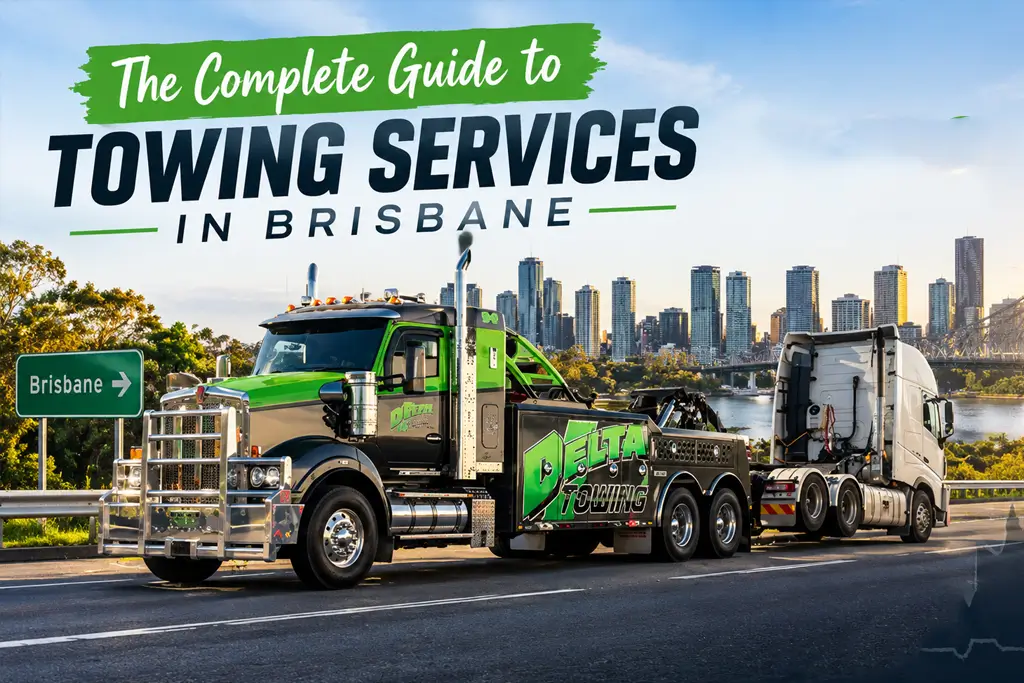
The Complete Guide to Towing Services in Brisbane
Brisbane's towing market serves a city of 2.5 million people with trucks, buses, and commercial vehicles running through an extensive road network in…
Read the article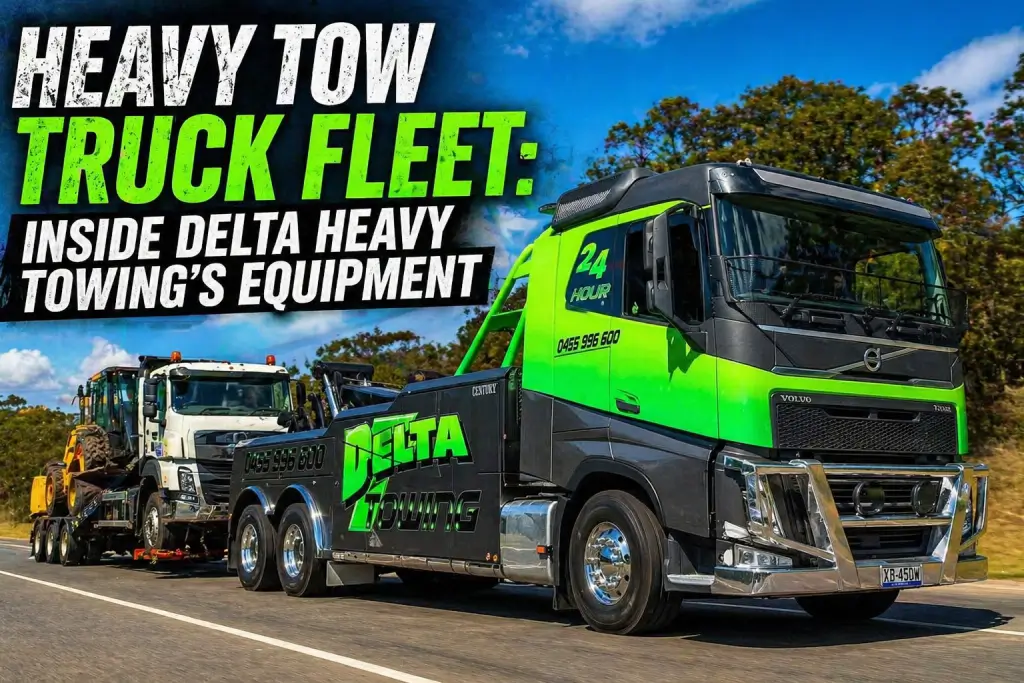
Heavy Tow Truck Fleet: Inside Delta Heavy Towing's Equipment
We get asked about our trucks regularly. Fleet managers want to know if we can handle their largest vehicle. Construction companies want to know if w…
Read the article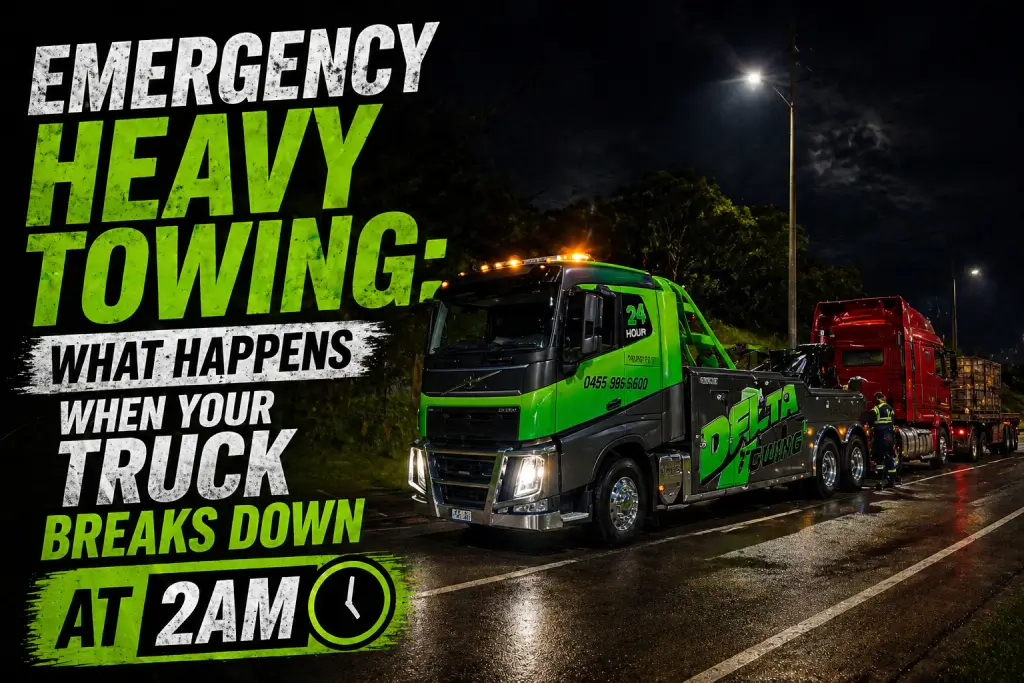
Emergency Heavy Towing: What Happens When Your Truck Breaks Down at 2AM
Emergency heavy towing is what stands between a stranded driver and a resolved crisis. The phone rings at 2am. It's your driver. The truck has stoppe…
Read the article