Heavy Haulage Permits in Queensland: What You Need to Know
Scheduled article. This page is live and indexable, but it is not listed on the News page until January 19, 2027.
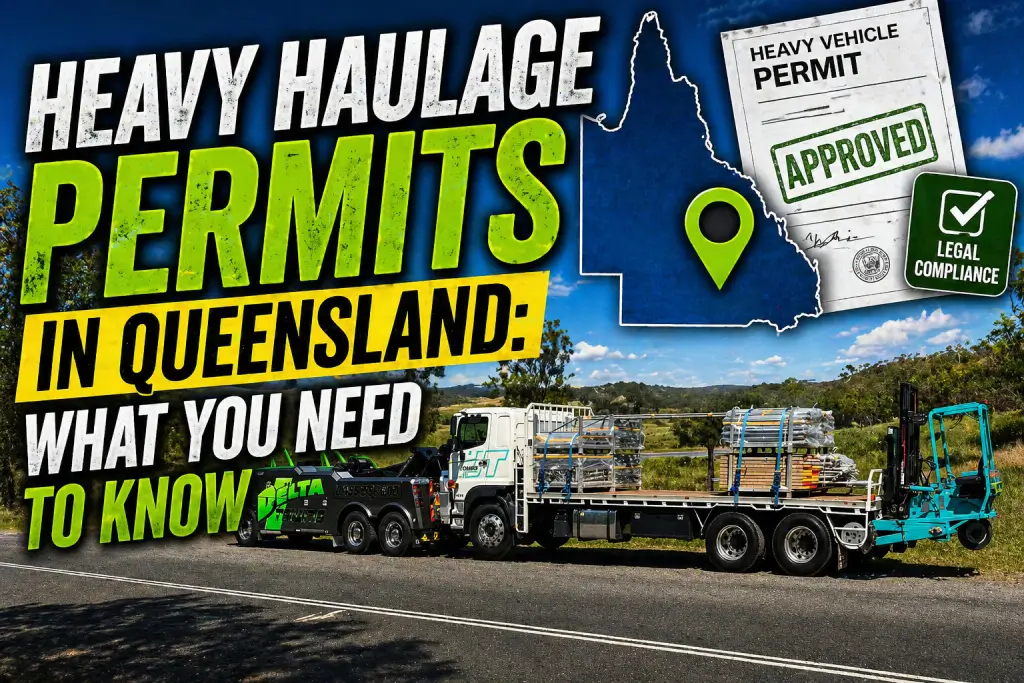
Heavy Haulage Permits in Queensland
If your load exceeds standard mass or dimension limits on Queensland roads, you need a permit from the NHVR before it moves. There are no exceptions, no grace periods, and the penalties for getting caught without one are substantial. This article covers the permit framework, the classes, and the practical steps for getting a permit sorted before your transport date.
When You Need a Permit
Standard limits for a heavy vehicle in Queensland are 2.5 metres wide, 4.3 metres high, and 19 metres long for a rigid vehicle. For mass, a standard semi-trailer combination is limited to 42.5 tonnes GCM on standard roads. Exceed any of these, and you enter permit territory.
These limits catch more loads than people expect. An excavator on a low loader often exceeds width limits. A prefabricated house section exceeds width and sometimes height. A crane with its boom extended horizontally exceeds length. Agricultural machinery like headers and sprayers regularly exceeds width.
Permit Classes
The NHVR uses a tiered permit system. The classes broadly work as follows:
Class 1 covers loads that are moderately oversize or overweight. Width up to about 3.5 metres, height up to about 4.6 metres, and weight up to certain thresholds depending on the vehicle configuration. Class 1 permits have standard conditions including speed limits, travel time restrictions, and escort requirements that apply to all permits in that class.
Higher classes cover progressively larger and heavier loads. As the class increases, the conditions become more specific. Route approval may be required. Bridge assessments may be needed. Multiple escort vehicles with qualified operators become mandatory. The permit processing time is longer because more assessment is involved.
How to Get a Permit
Permit applications go through the NHVR portal. You need the vehicle details including registration and configuration, the load description including certified dimensions and weight, the proposed route, and the transport date.
For Class 1 permits, processing typically takes 2-5 business days. Higher class permits take longer depending on the complexity. If route-specific assessments are needed, allow 2-4 weeks.
Many operators hire their transport company to handle the permit application because the transport company knows the vehicle configurations, common routes, and the documentation requirements. Delta Heavy Towing lodges NHVR permits on behalf of clients as part of our heavy haulage service.
Common Permit Mistakes
Applying too late. If you need a Class 1 permit on Thursday and you apply on Wednesday, you are probably not getting it in time. Plan ahead and factor in processing time.
Incorrect dimensions. If the load dimensions on the permit do not match the actual dimensions on the road, the permit is invalid. Measure carefully, and measure the load as it sits on the transport vehicle, not the raw dimensions of the equipment.
Ignoring conditions. Permits come with conditions: travel times, speed limits, escort requirements, approved routes. Violating conditions invalidates the permit. Some conditions specify that travel is only permitted during daylight hours or outside peak traffic periods.
Penalties
Operating an oversize or overweight vehicle without a valid permit, or outside permit conditions, attracts significant fines in Queensland. Penalties can reach five figures, and repeat offences can affect the operator's accreditation. Beyond fines, an unpermitted load that damages infrastructure creates civil liability.
For heavy haulage transport with permits managed by us, call Delta Heavy Towing on +61 455 996 600.
Need this handled today?
Dispatch is staffed 24 hours a day, and we quote before the truck rolls. Tell us the vehicle, the location and where it needs to go.
Keep reading
Related guides
The Complete Guide to Towing Services in Brisbane
Brisbane's towing market serves a city of 2.5 million people with trucks, buses, and commercial vehicles running through an extensive road network in…
Read the article
Heavy Tow Truck Fleet: Inside Delta Heavy Towing's Equipment
We get asked about our trucks regularly. Fleet managers want to know if we can handle their largest vehicle. Construction companies want to know if w…
Read the article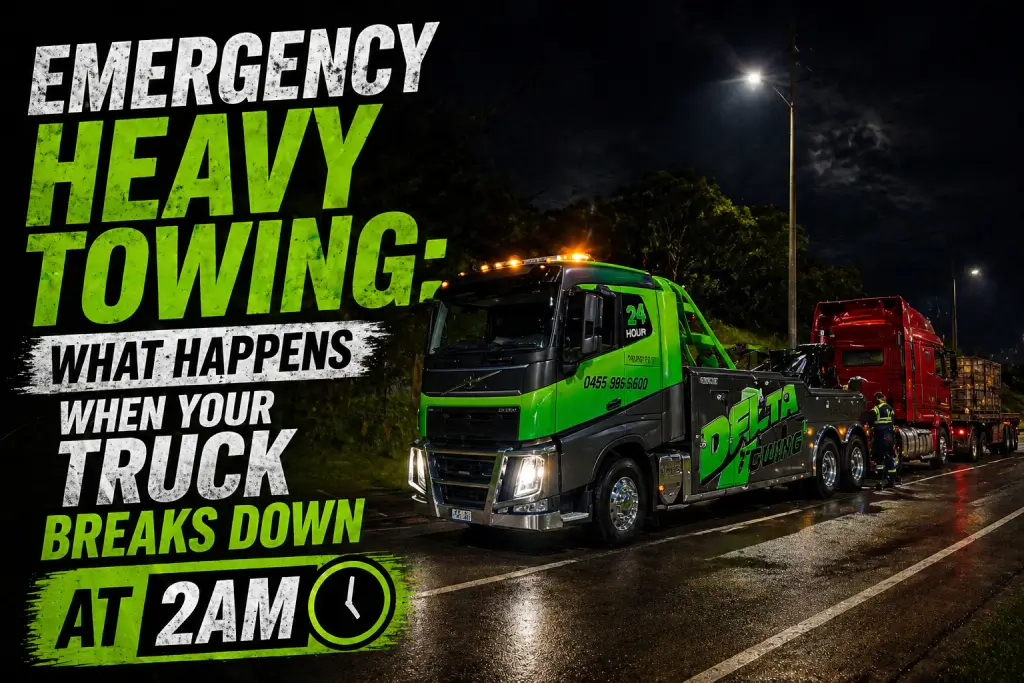
Emergency Heavy Towing: What Happens When Your Truck Breaks Down at 2AM
Emergency heavy towing is what stands between a stranded driver and a resolved crisis. The phone rings at 2am. It's your driver. The truck has stoppe…
Read the article