
Heavy Duty Towing vs Standard Towing: What Is the Difference?
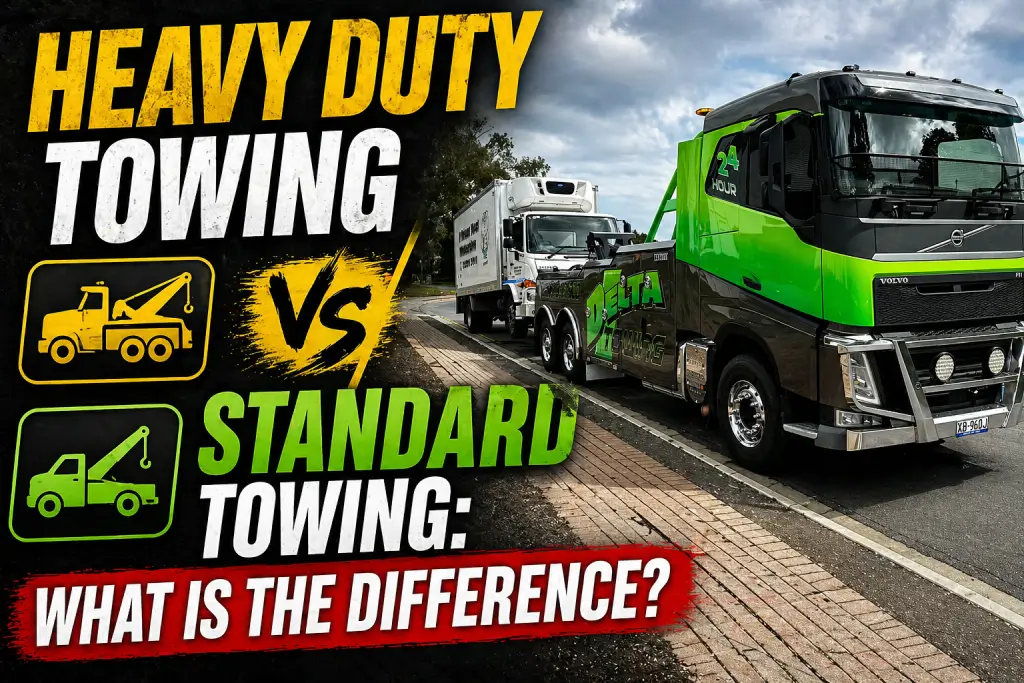
People who drive cars rarely think about towing categories. A tow truck is a tow truck. But if you operate trucks, buses, or heavy equipment, the distinction between standard towing and heavy duty towing matters a lot, because calling the wrong type of tow truck wastes time and sometimes makes the situation worse.
What Standard Towing Covers
Standard towing, sometimes called light-duty towing, handles passenger cars, utes, vans, and light commercial vehicles. These are typically vehicles under 4.5 tonnes GVM. The tow trucks used for this work include wheel-lift trucks, flatbed tilt trays rated to about 3-4 tonnes, and car carriers.
Standard tow truck operators usually hold a standard car licence or a Light Rigid licence. They are experienced with car-sized vehicles, which have conventional braking, steering, and coupling systems.
Most towing companies in Brisbane fall into this category. They handle the bulk of roadside assistance work: dead batteries, flat tyres, lockouts, accident towing for cars, and breakdowns. They do it well, and they do it in large numbers.
What Heavy Duty Towing Covers
Heavy duty towing starts where standard towing stops. We are talking about vehicles and equipment above 4.5 tonnes and often well above 20 tonnes. Semi-trailers, B-doubles, rigid trucks with loaded trays, city buses, coaches, earthmoving equipment, and industrial machinery.
The tow trucks used for heavy duty work are substantially larger. A heavy boom truck, which is the primary workhorse for heavy towing, weighs 20-30 tonnes itself before it connects to anything. It has a boom arm with hydraulic controls, an underlift that slides under the casualty vehicle's axle, and a winch rated for heavy loads.
Heavy tilt trays used in this work are rated to 20-25 tonnes, compared to the 3-4 tonne tilt trays used for cars. Low loaders for machinery transport have even higher capacities.
Why the Distinction Matters
If your rigid truck has broken down and you call a car towing company, one of two things happens. Either they tell you they cannot help and you have wasted time, or they send a truck that is not rated for your vehicle and the situation gets messy.
A standard tilt tray rated to 4 tonnes cannot carry a 12-tonne truck. A light-duty wheel-lift cannot safely tow a loaded semi-trailer. And a standard tow truck operator may not know how to perform a driveline disconnect on a heavy vehicle, manage air brake systems, or handle the stability characteristics of a high-centre-of-gravity load like a bus.
Heavy duty towing operators hold Heavy Rigid (HR), Heavy Combination (HC), or Multi-Combination (MC) licences. They understand the mechanical systems of heavy vehicles, including air brakes, exhaust brakes, driveline configurations, and coupling mechanisms. They carry traffic management equipment for motorway work and have the training to set up safe working zones around a disabled heavy vehicle.
Equipment Differences
Standard tow trucks carry a hydraulic boom or flatbed rated for 3-5 tonnes, a winch rated for car-weight vehicles, basic recovery straps, and jump-start equipment.
Heavy duty tow trucks carry a boom and underlift rated for 15-25 tonnes, winches rated for 20-40 tonnes, driveline disconnect tools, heavy chain, rated shackles, snatch blocks, airbags for lifting, traffic management equipment including signs and cones, and spill containment kits.
The rotator is a heavy towing specialist piece of equipment that has no equivalent in standard towing. It can lift, rotate, and reposition heavy vehicles from multiple angles, which is essential for rollover recovery and complex extractions.
Cost Difference
Heavy duty towing costs more than standard towing. The equipment costs more to buy and maintain, the operators need higher licences and more training, and the jobs take longer and use more fuel. Expecting heavy duty towing at car towing prices is not realistic, and a company that offers it at those prices is likely cutting corners on equipment, insurance, or operator qualifications.
Which Do You Need?
If your vehicle weighs more than about 4.5 tonnes, you need heavy duty towing. If you are unsure, tell the dispatcher what you are driving when you call. A good heavy towing company will tell you if your vehicle is within their scope and refer you elsewhere if it is not.
For heavy duty towing in Brisbane, call Delta Heavy Towing on 0455 996 600.
Need this handled today?
Dispatch is staffed 24 hours a day, and we quote before the truck rolls. Tell us the vehicle, the location and where it needs to go.
Keep reading
Related guides
What Makes a Good Heavy Duty Towing Company? 7 Things to Check
Plenty of towing company in Brisbane will tell you they handle heavy vehicles. Fewer actually have the equipment, licences, and experience to do it p…
Read the article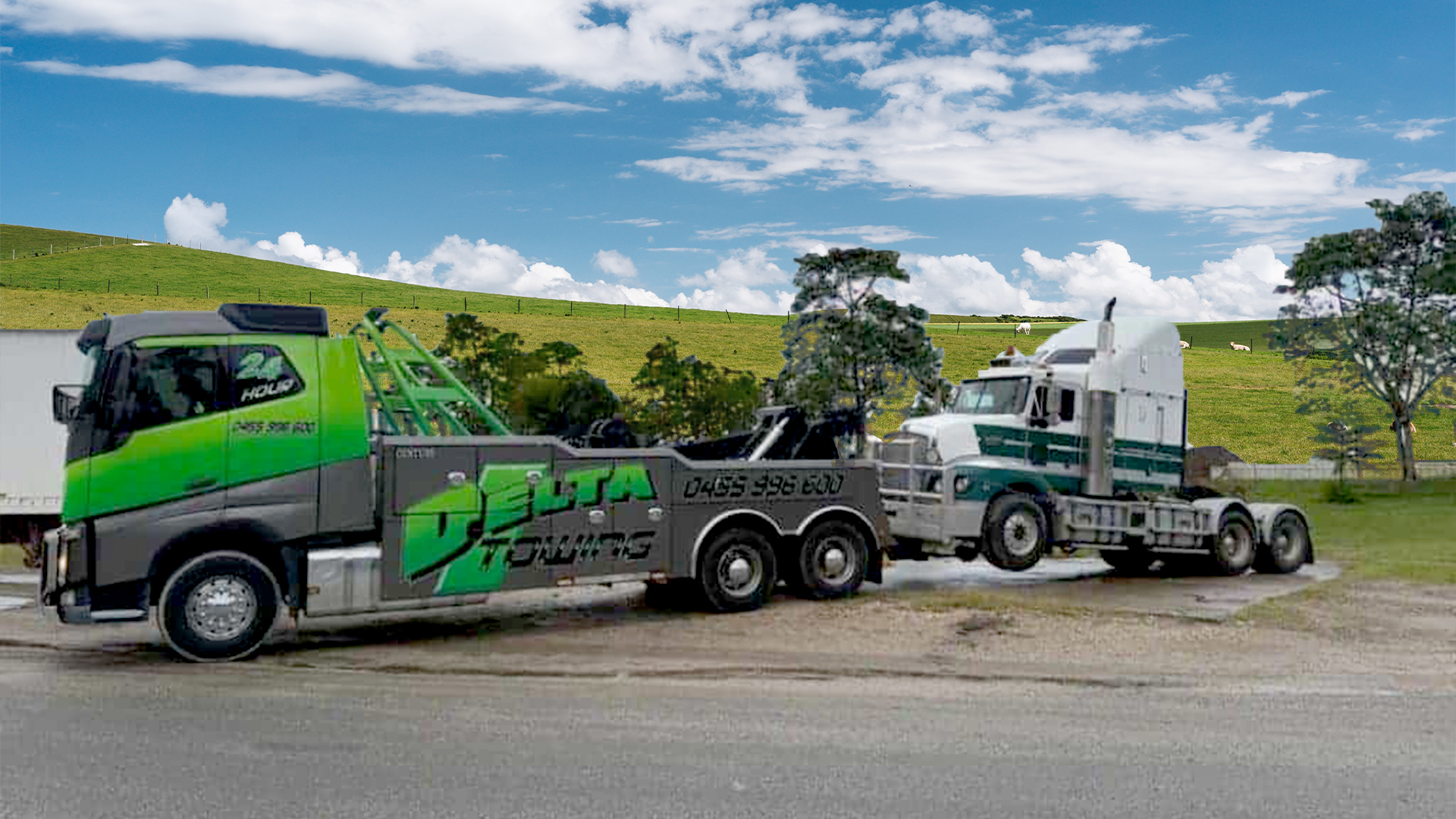
Choosing the Right Tow Truck for a Toowoomba Breakdown
In order to deliver timely, professional recovery services and guarantee seamless operations, especially in emergency situations, Emergency Towing To…
Read the article
What Is Heavy Duty Truck Towing, and When Do You Need It?
An on-road vehicle halt can occur any time, anywhere. The same thing happens with heavy duty truck also! Due to sudden engine breakdown, mechanical m…
Read the article